
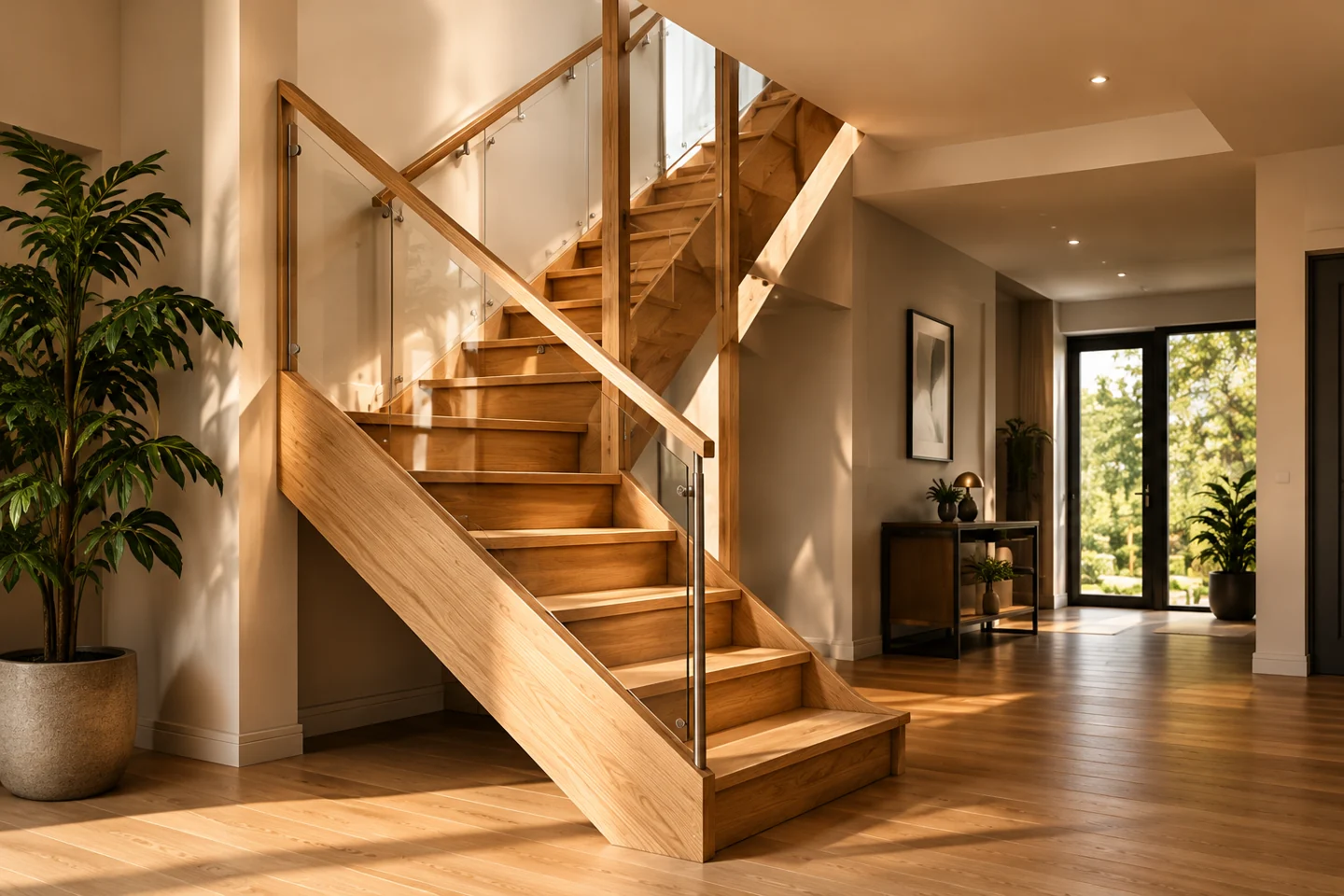
Oak or beech stairs? Ask for two specific proposals rather than choosing between species names alone. Timber species, tread construction and surface finish are separate decisions. This guide helps you prepare a useful discussion with the maker: how to examine samples, what to ask about the finish and how to request comparable quotations. It is neither a durability ranking nor a price list. It does not replace a design assessment for your particular building.
Start with labelled samples, not a photograph
Request labelled oak and beech samples with the proposed finish. View them beside your flooring, doors and balustrade in daylight and artificial light. State whether knots, colour variation and visible joints are acceptable. This is an editorial recommendation for agreeing the appearance: choose an approved reference sample rather than relying on “like the inspiration picture”. Ask what range of natural variation to expect across the finished set of treads.
Define the construction in both proposals
Separate the species from the way the component is made. Ask whether the price covers solid timber treads, glued timber components or components with a timber surface layer, and which parts use that material. Record thickness, joints and machining scope as details for the maker to confirm. Comparing a complete oak structure with beech overlays alone cannot isolate the difference in timber cost. Keep the supply scope the same in both proposals.
Varnish, oil or a surface awaiting finishing?
A species name does not specify a finished surface. DOLLE describes wooden models supplied with an untreated surface; this is not a Nord Haus specification. For your own order, agree the coating product, colour and sheen separately. Request cleaning instructions and a description of how local damage is repaired. Do not assume that every oil permits the same repair method or that every varnish performs identically. Ask for the particular finishing system to be identified.
Indoor conditions and everyday care
Wood changes dimensions as its moisture content changes; the species name does not remove that relationship. Tell the maker about wet construction work, heating and the expected indoor conditions. Request requirements for delivery, storage, installation and use. Do not choose one supposedly universal humidity value from an unrelated online guide. Clarify permitted cleaning products and the signs of coating damage that require stopping use and seeking advice. Agree these practical conditions before approving production.
Compare practical answers, not a lifetime promise
The Forest Products Laboratory identifies appearance and cleanability as important considerations for indoor wood finishes. Turn that into questions about the actual tread: how is it cleaned, how is wear recognised and what does refinishing involve? Species hardness alone does not establish that a complete staircase resists every kind of damage. Ask separately for written warranty terms and exclusions. This guide promises neither a fixed maintenance-free lifespan nor a universal winner between oak and beech.
Requesting a useful comparison from Nord Haus
Prepare the same sketch and order scope for the oak and beech options. Describe the appearance, tread construction, finish, balustrade and additional components. Ask for measurement, design, transport and installation to be itemised or clearly included. Confirm the availability of both species for your project: this article does not establish stock availability. Agree the final specification, price and timing individually. The configurator below helps organise an initial enquiry; it is not an approved technical design.
Sources and further reading
Your preparation checklist
- Labelled samples of both species with the intended finish.
- Matching tread construction and supply scope.
- Written care, refinishing and warranty information.
- Confirmed availability, an individual quotation and a design before production.
This guide helps you prepare an enquiry. It does not replace measurement, technical design or an agreed offer.